
Budget Allocation Improvement
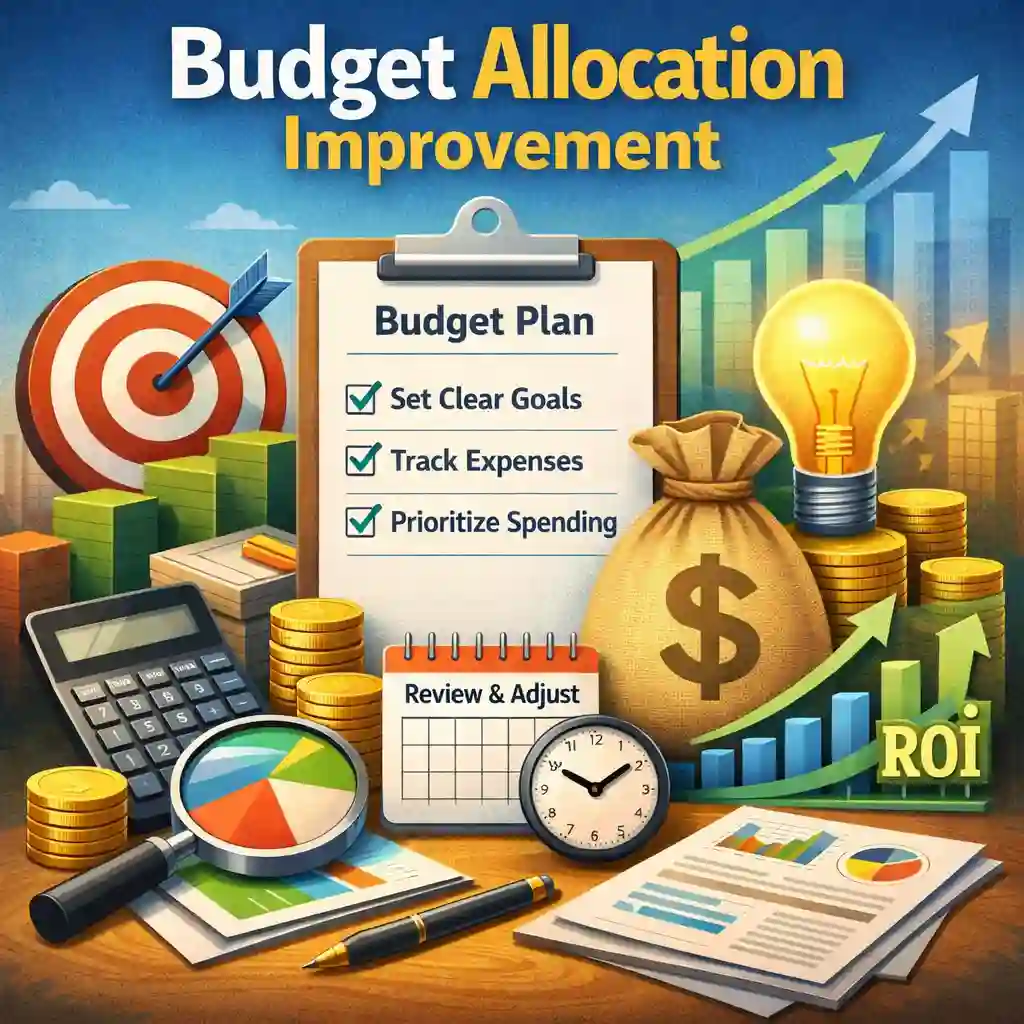
Managing a budget effectively is one of the biggest challenges for both businesses and individuals. Poor allocation can lead to wasted resources, missed opportunities, and financial stress. Improving budget allocation is not just about cutting costs—it’s about making smarter, more strategic decisions so your money works harder for you.
The Problem: Why Budget Allocation Matters
Imagine trying to run a business or manage personal finances without knowing exactly where your money is going. You might overspend in one area while neglecting another, or invest in things that don’t deliver value.
The result?
Inefficiency and frustration
Missed opportunities
Financial instability
In short, the problem is simple: money isn’t being used in the most effective way possible.
Causes of Poor Budget Allocation
Understanding why this problem happens is the first step to solving it. Common reasons include:
Lack of Clear Goals
Without defined objectives, deciding where to allocate funds becomes guesswork.Incomplete Financial Data
Allocating budgets based on assumptions rather than actual numbers can lead to mismanagement.Prioritization Issues
Focusing on what seems urgent rather than what is important may result in wasted money on short-term needs.Resistance to Change
Sticking to outdated spending patterns or fixed allocations prevents better resource management.External Factors
Unexpected costs or emergencies can disrupt even a well-planned budget.
Solutions: Step-by-Step Guide to Better Budget Allocation
Improving budget allocation requires a structured and flexible approach. Here’s a step-by-step guide:
1. Define Clear Goals
Identify priorities—business growth, cost reduction, or personal savings.
Set measurable objectives for each spending area.
2. Track Expenses Accurately
Use financial software, apps, or spreadsheets.
Categorize spending to understand where money is going.
3. Analyze and Adjust
Compare spending against goals.
Identify overspending or underfunded areas.
4. Prioritize High-Impact Areas
Allocate more resources to areas that provide the most value or ROI.
Reduce spending in low-impact activities.
5. Create a Flexible Budget
Build room for unexpected costs.
Review and update your budget regularly (monthly or quarterly).
6. Involve Key Stakeholders
For businesses: consult department heads or team leaders.
For personal finances: discuss major decisions with family members or partners.
7. Monitor and Evaluate Regularly
Track results to see if the strategy is delivering outcomes.
Make iterative improvements based on real data.
Benefits of Effective Budget Allocation
When money is allocated wisely, the results are clear:
Optimized Spending – Money goes where it delivers the highest value.
Reduced Waste – Minimize unnecessary expenditures.
Better Decision-Making – Insights help make strategic choices.
Goal Achievement – Resources align with short- and long-term objectives.
Financial Stability – Avoid overspending and prepare for emergencies.
Increased ROI – Investments in key areas yield higher returns.
Final Thoughts
Improving budget allocation isn’t about spending less—it’s about spending smarter. By defining clear goals, tracking expenses, prioritizing high-impact areas, and reviewing your budget regularly, you can maximize the impact of every dollar.
Whether it’s for personal finance or business operations, effective budget allocation provides clarity, control, and confidence in your financial decisions.
Start today: analyze your budget, make strategic changes, and watch your financial efficiency and ROI wgro.